Description
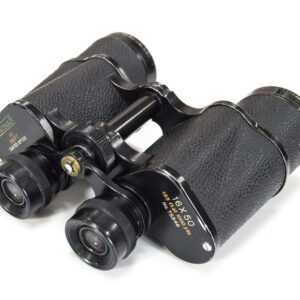
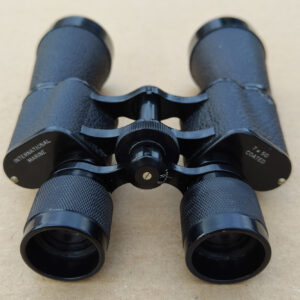
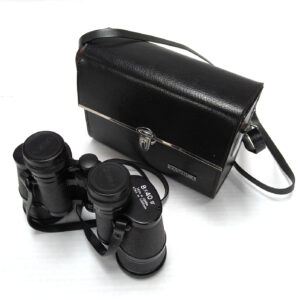
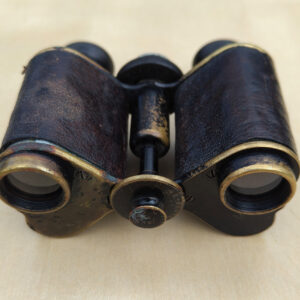
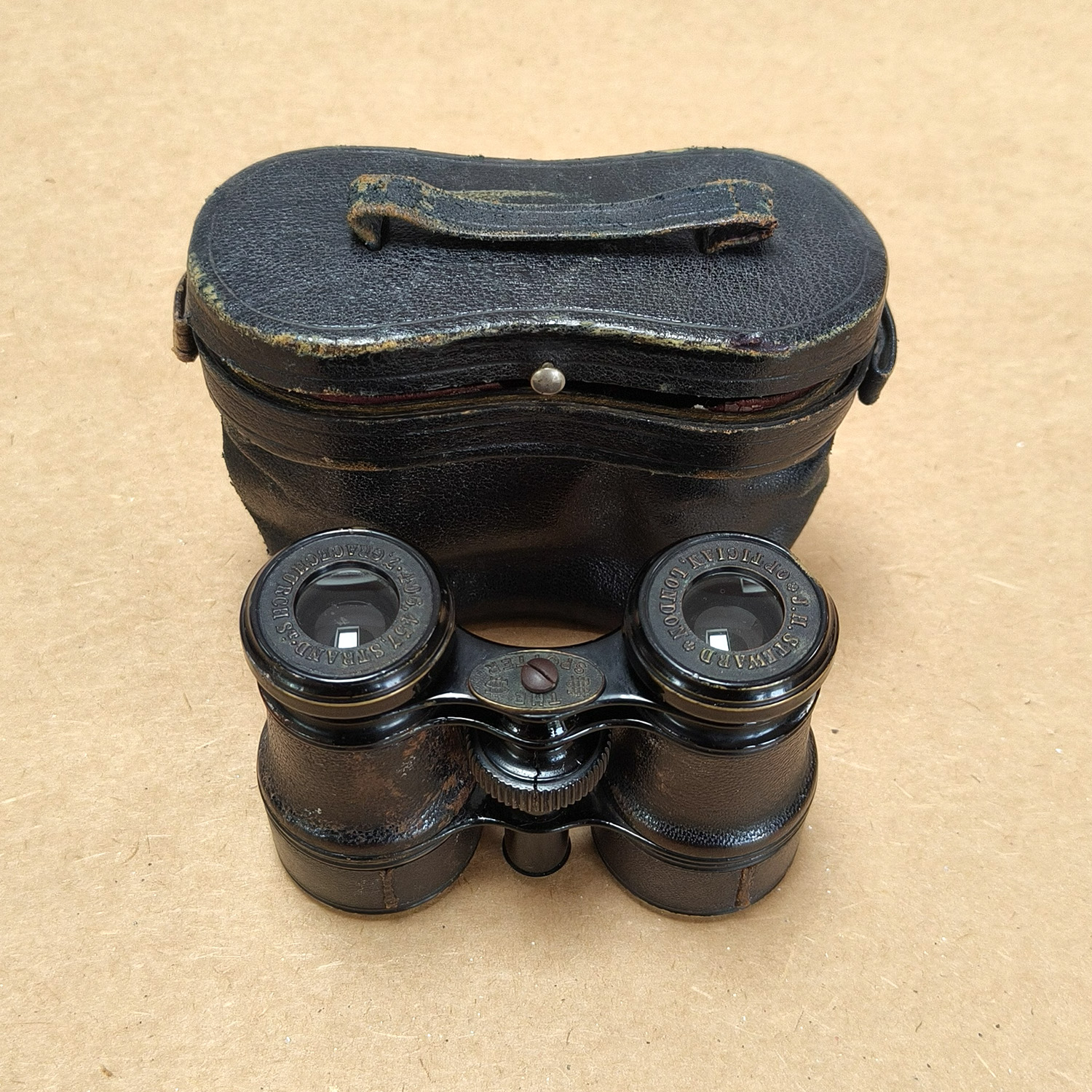
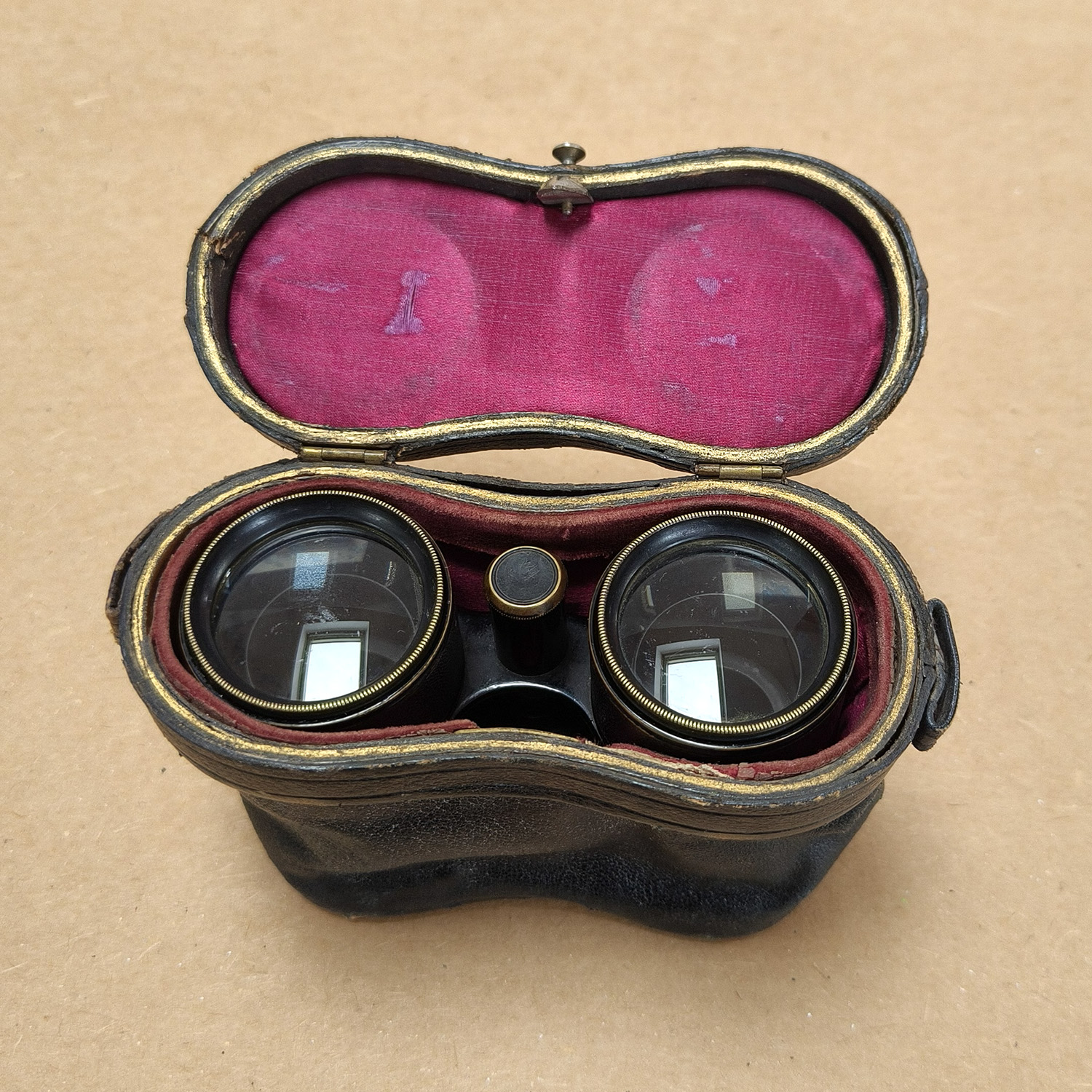
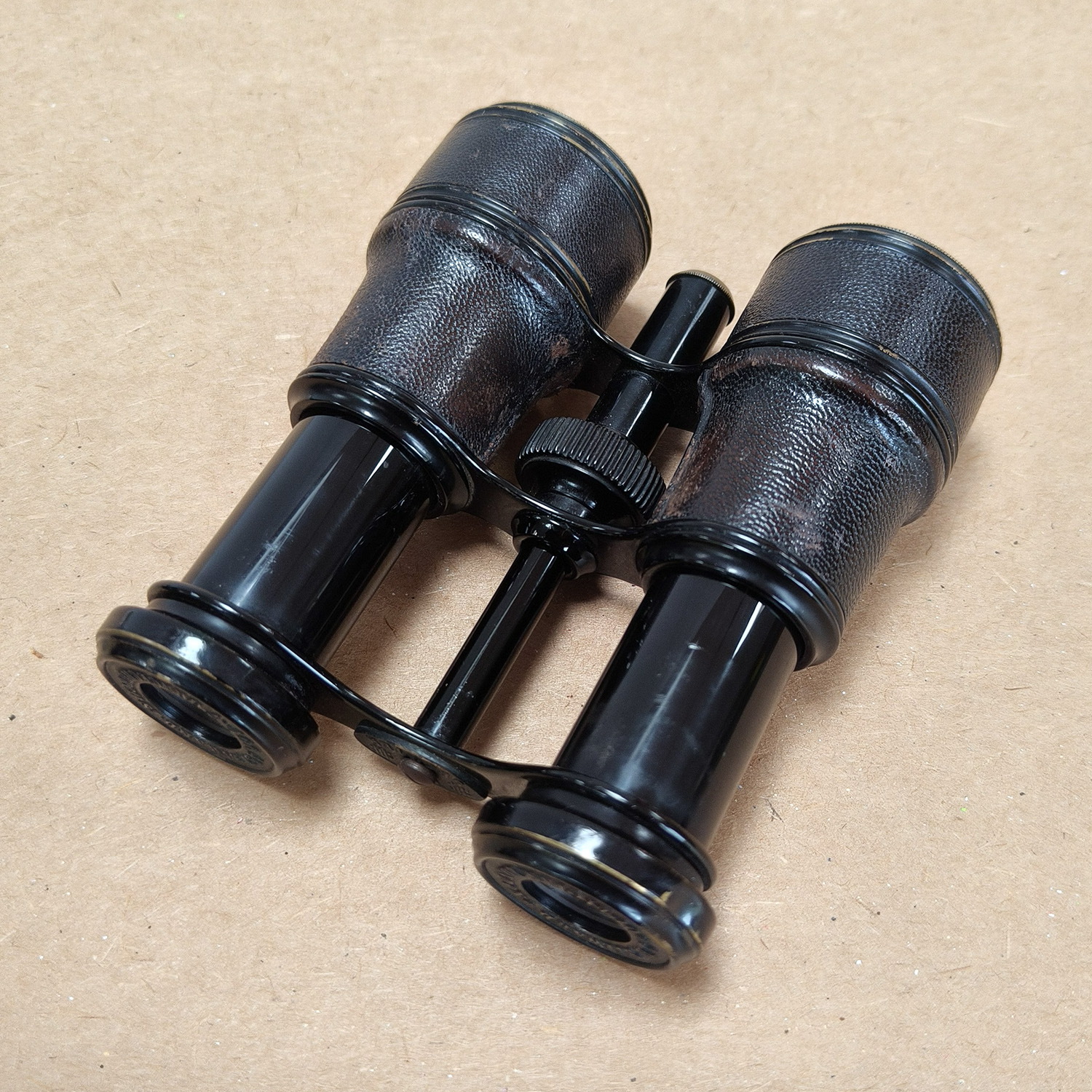
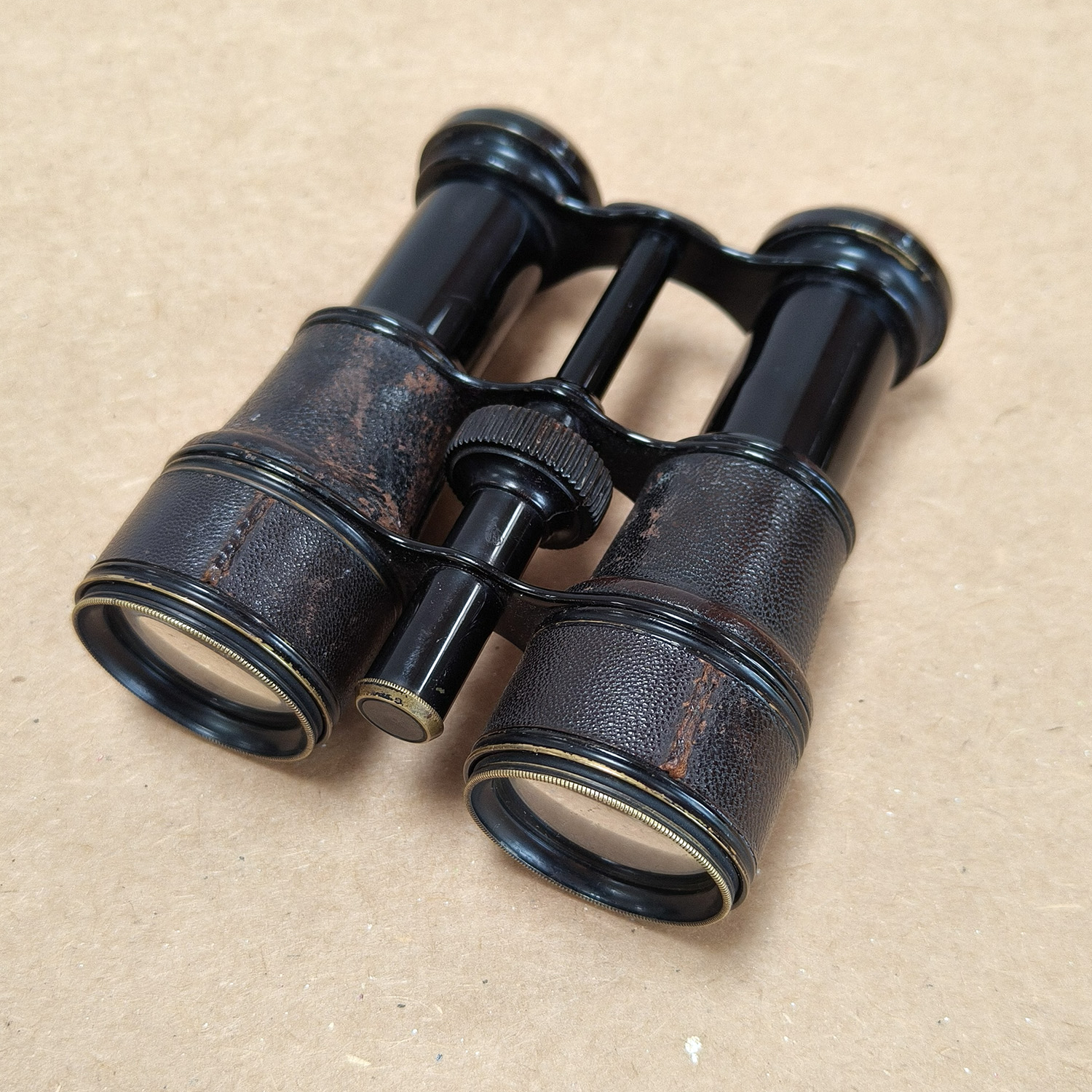
A fine pair of antique J.H. Steward Optician London binoculars, complete with their original fitted leather case.
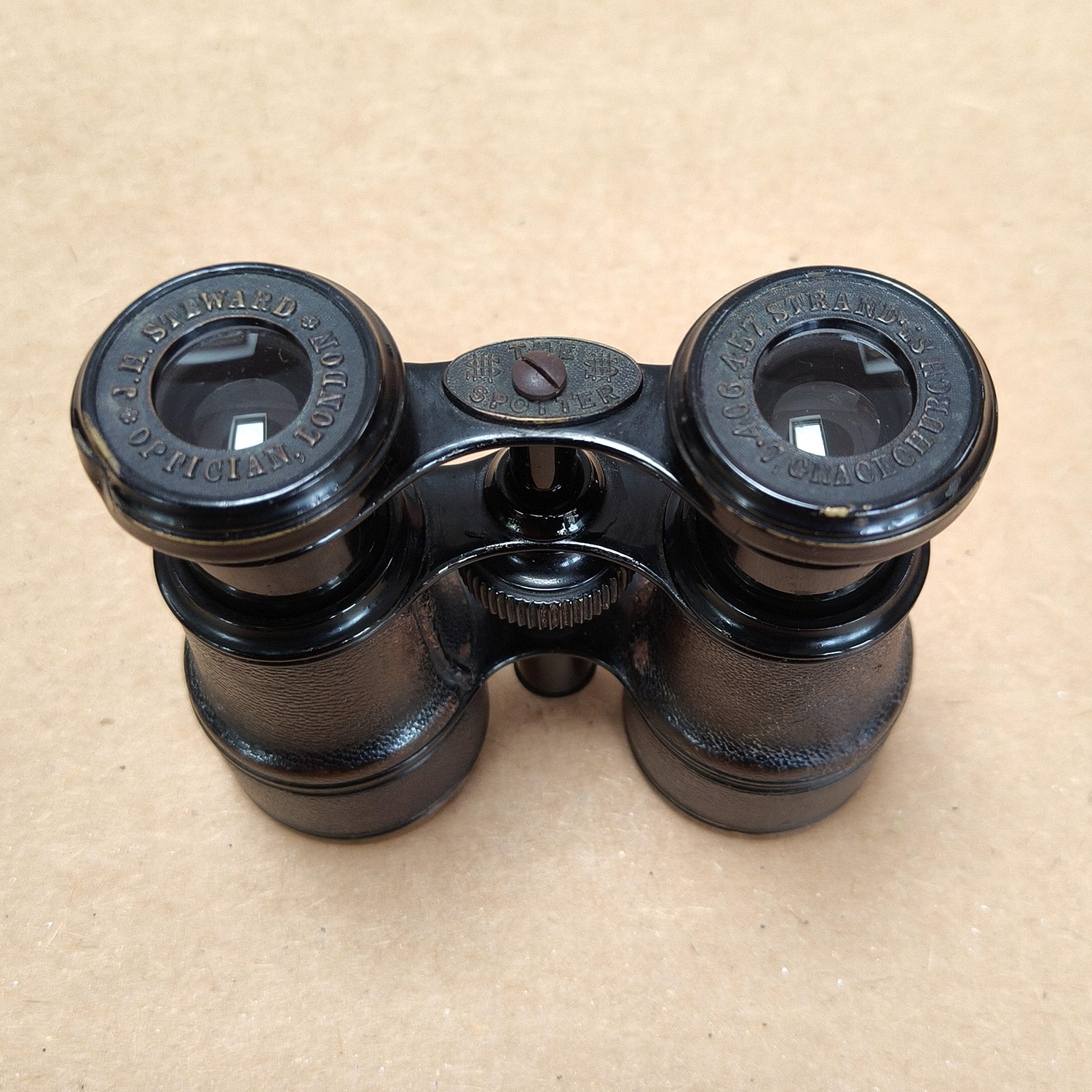
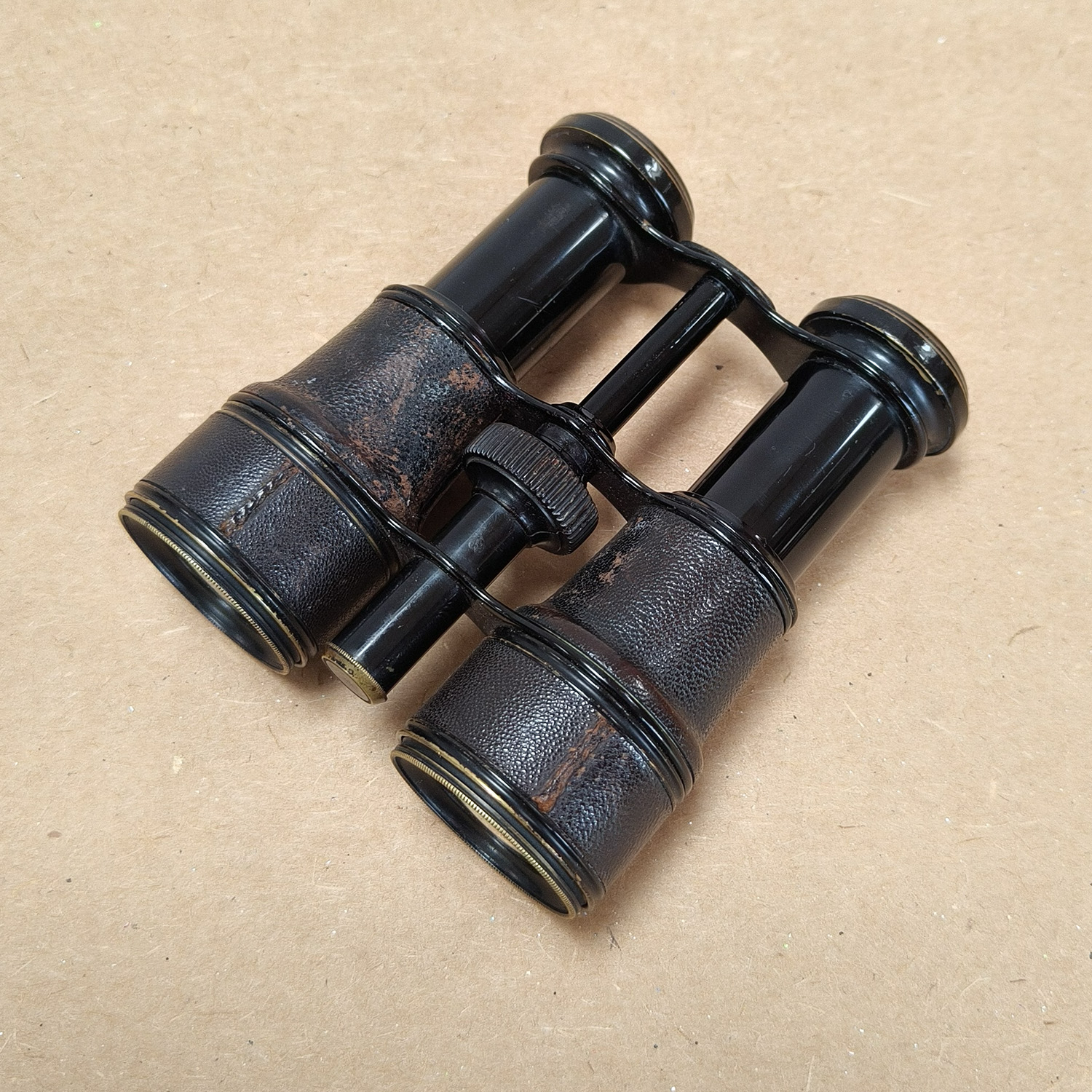
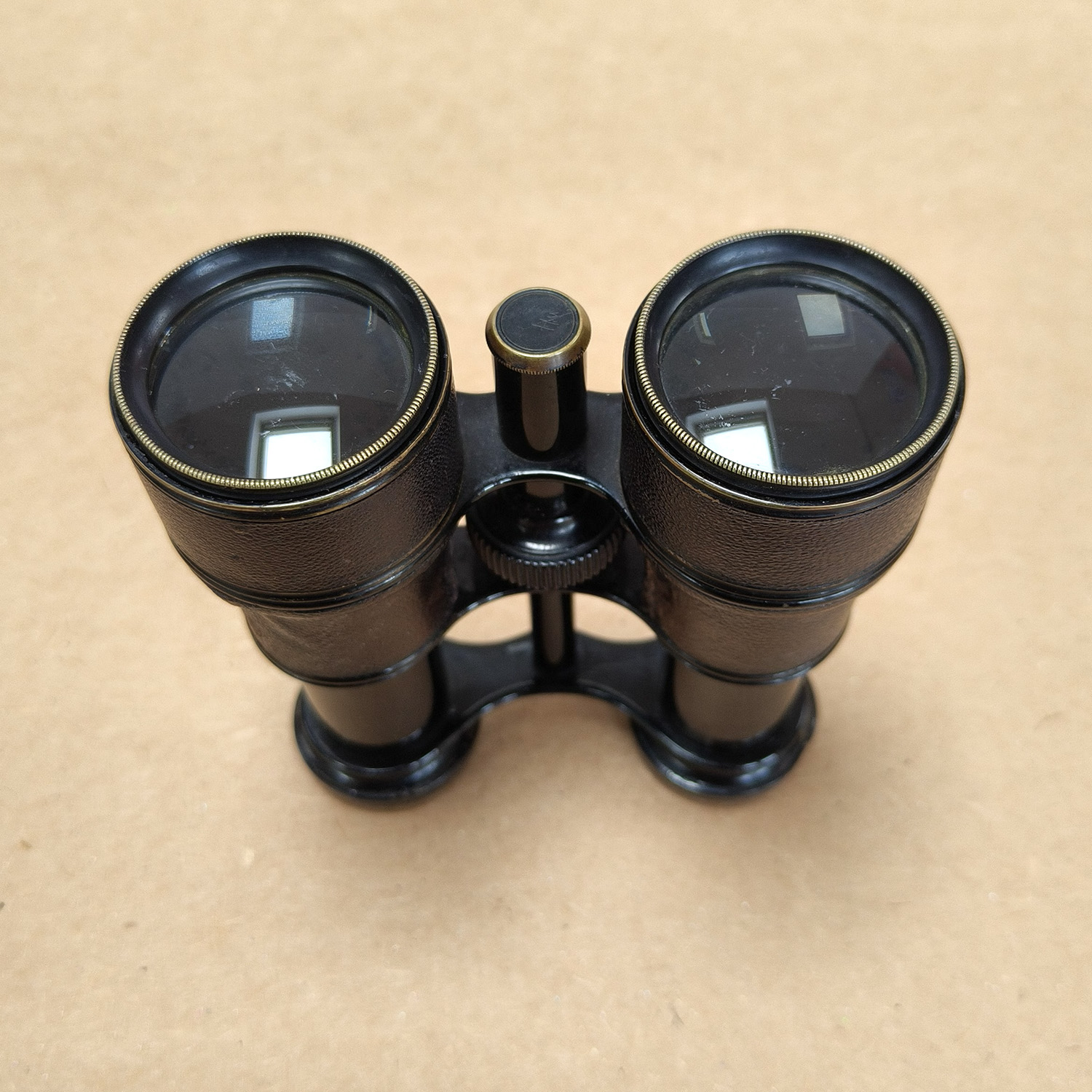
The eyepieces are marked “J.H. Steward, London, Optician; 406, 457 Strand, 7 Gracechurch St, ”, and the bridge plate is marked “The Spotter”. They are an attractive early field / opera-style binocular with black painted metal body, textured leather covering, brass-toned lens edging, central focusing, and a fitted black leather case with red interior lining.
The lenses have been cleaned and the binoculars produce clear and sharp images, especially considering their age. The focusing mechanism works well, and the binoculars display very well as a collectible antique optical instrument.
Cosmetically, they are in used antique condition with age-related wear throughout. There is rubbing, paint wear, marks to the leather covering, and general signs of age and use. The fitted leather case is included and presents well, although it also shows wear, scuffs, edge rubbing and age-related deterioration, particularly around the handle and edges.
A desirable antique pair from a well-known London optician and instrument maker, suitable for use, display, collecting, theatre interest, or as a decorative scientific instrument.
Main features:
- Maker / retailer: J.H. Steward
- Markings: J.H. Steward, Optician London; 406, 457 Strand, 7 Gracechurch St
- Type: Antique field / opera binoculars
- Focus: Central focusing
- Objective lens diameter: 35mm
- Eye lens diameter: 17mm
- Magnification: not marked, but estimated approx. 4x or 5x
- Body: Black painted metal with leather covering
- Extendable sunshades
- Size: 100mm (W) x 80mm (H) x 42mm (D)
- Weight: 379 g
- Case: Original fitted leather case with red interior
Note:
J.H. Steward was a London optician and scientific instrument maker founded in 1852 by James Henry Steward. Based on the style, the 406, 457 Strand / 7 Gracechurch Street address marking, the Galilean field-binocular form, the fitted leather case, and the overall construction, this pair is most likely late Victorian to Edwardian / early 20th century, probably around c.1890s–1910s.
There is a small dent to the edge of one eyepiece metal ring, as shown in the photo. This is purely cosmetic and does not affect the use or performance of the binoculars in any way.